Why Adding Extra TV Points Often Causes Signal Problems
If you’ve added extra TV points and suddenly your reception has got worse, you’re not imagining it. This is a very common issue and it happens because the TV signal is being split between more TVs than the system was originally designed for.
Below, we explain why this happens, what symptoms to look out for, and how extra TV points should be set up properly.
What Happens to the Signal When It’s Split
A TV aerial provides a fixed amount of signal. When that signal is split to feed additional TVs, each split reduces the strength of the signal reaching each television.
Without the correct equipment, this can result in:
- Pixelated or freezing pictures
- Missing channels
- Some TVs working better than others
- Signal loss on certain channels only
The more times the signal is split, the greater the loss.
Common Mistakes With Extra TV Points
Problems often occur when:
- Extra TV points are added without amplification
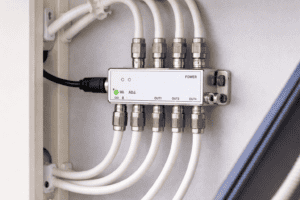
- Poor-quality splitters are used
- Cabling is old or damaged
- The aerial was only suitable for one TV
In many cases, the system works “well enough” at first, then degrades over time.
Why Signal Boosters Don’t Always Fix the Problem
Adding a signal booster without checking the system can sometimes make things worse. Boosting a weak or noisy signal amplifies interference as well as the signal itself.
This can lead to:
- Unstable reception
- Random channel breakup
- Signal overload on some TVs
Amplifiers need to be chosen and installed correctly for the system they’re supporting.
How Extra TV Points Should Be Installed Properly
A properly designed multi-TV system will:
- Use the correct aerial for the area
- Distribute signal evenly to each TV
- Include amplification only where needed
- Use good-quality cabling throughout
This ensures consistent reception across all TVs in the property.
Local Experience Makes a Difference
We regularly install and correct multi-TV systems across Sussex and surrounding areas. Many signal problems with extra TV points can be resolved without replacing the entire system, once the cause is identified properly.
