On this page
When people book a TV aerial installation, they often assume it’s a simple job: put an aerial on the roof, plug it in, and you’re done. In reality, a good installation involves several important decisions that directly affect picture quality, reliability, and how long the system lasts.
This guide explains what a proper TV aerial installation actually includes, where aerials are installed, and why installation quality matters far more than most people realise.
What a professional TV aerial installation includes
A proper installation starts before anything is fitted. A professional installer will first assess signal strength and quality at the property using specialist testing equipment. This helps determine the correct aerial type, mounting position, and alignment before work begins.
Once the best setup is identified, the installation typically includes fitting the aerial securely, aligning it precisely towards the correct transmitter, running high-quality cabling, and testing the signal at the TV point. The goal is stable reception with enough headroom to cope with weather and future changes.
If you’re still deciding what aerial is right for your home, start here:
Which TV Aerial Do I Need? A Plain-English Guide for UK Homes (2026).
Where TV aerials are installed and why
Chimney-mounted aerials
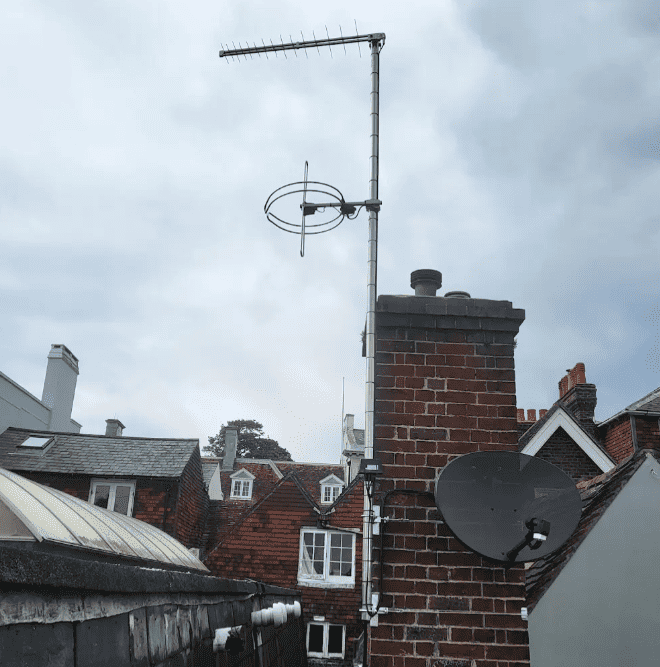
Chimney installations are common because chimneys often provide the best height and clearest signal path. Height matters because it helps avoid obstructions such as nearby buildings and trees. A properly fitted chimney mount should be secure and weather-resistant.
Gable end or wall-mounted aerials
Some properties don’t have a chimney, or the chimney isn’t in the best position. In these cases, aerials may be installed on a gable end or external wall. This can work well if the signal path is clear and the mounting height is sufficient.
Loft-installed aerials
Loft aerials are sometimes used where external installation isn’t possible or permitted. They can work in strong signal areas, but they’re more affected by roof materials, foil-backed insulation, and electrical interference. A loft aerial is not suitable for every property.
Why alignment and positioning matter
Even a high-quality aerial won’t perform properly if it’s poorly aligned. Small errors in direction or tilt can lead to pixelation, missing channels, or signal drop-outs during bad weather.
Professional installers align aerials using signal meters rather than relying on visual guesswork. This helps ensure the aerial locks onto the best available signal, not just the strongest-looking one.
If you’re seeing blocky pictures or stuttering video, this guide may help:
Why Is My TV Pixelating? 10 Causes and How to Fix Them (2026).
Cabling: an often-overlooked part of installation
The cable connecting the aerial to the TV is just as important as the aerial itself. Low-quality cable, water ingress, or poor connections can undo the benefits of a good aerial.
A proper installation uses external-grade coaxial cable, securely clipped and weatherproofed, with neat entry points into the property. Indoors, wall plates and fly-leads should be in good condition to avoid signal loss.
Installing for multiple rooms
If one aerial feeds more than one TV, the installation must account for signal splitting. This may involve splitters or powered distribution units, depending on signal strength.
Adding boosters without proper testing can cause problems rather than solve them. A professional setup ensures each room receives a clean, usable signal.
Why “quick installs” often cause problems later
Many TV reception issues trace back to rushed or poor-quality installations. Common problems include aerials fitted too low, cheap cable used externally, loose fixings, or incorrect alignment.
These shortcuts might work initially but often lead to repeat problems, especially after strong winds or heavy rain. A correctly installed aerial should work reliably for many years without constant adjustment.
If your signal drops mainly when the weather turns, this post explains why:
Why Your TV Loses Signal in Bad Weather (2026).
Repair, upgrade, or replace?
Not every signal issue means a full replacement is needed. Sometimes an aerial can be realigned or a damaged cable replaced. In other cases, particularly with older aerials, upgrading to a modern setup is more cost-effective in the long run.
A professional assessment helps identify the best option rather than guessing.
When satellite might be the better option
In some areas, especially where Freeview reception has always been unreliable, satellite TV can offer a more stable alternative. If you’ve had repeated aerial issues over the years, switching platform may save money and frustration in the long run.
If you suspect your dish is the problem rather than your aerial, see:
Satellite Signal Problems Explained (2026).
Check Freeview coverage before you book
If you want a quick idea of whether you’re likely to be in a strong or weak signal area, the official Freeview checker is a good starting point. It won’t replace an on-site signal test, but it can help set expectations:
Freeview Coverage Checker.
Need an aerial installed, repaired, or upgraded?
If you want a TV aerial installed properly, with stable reception and neat cabling, a professional assessment is the quickest way to get a clear answer and a reliable setup.
Contact us to book an installation or get advice.
TV AERIAL FAQ
How long does a TV aerial installation take?
Most standard installations take a few hours, depending on access, cable routing, and whether you’re feeding one room or multiple TVs. Complex installs or difficult access can take longer.
Is a chimney always the best place for a TV aerial?
Not always. Chimneys often provide good height, but the best location depends on signal quality at your property. Some homes get a better signal from a gable end, wall mount, or another high point.
Do I need a signal booster?
Only if testing shows the signal is weak or you’re splitting the signal to multiple rooms and the level drops too low. Boosters won’t fix poor alignment, water ingress, or interference.
Can a loft aerial work as well as an outside aerial?
Sometimes, in strong signal areas. But loft aerials can be affected by roof materials and insulation, and they’re not suitable everywhere. Testing is the best way to know.
Why does a new aerial still pixelate in bad weather?
Pixelation can be caused by alignment, cabling, connectors, splitters, or a marginal signal that drops when conditions worsen. A proper install aims to leave enough signal headroom to reduce weather-related issues.
When should I consider satellite instead of an aerial?
If Freeview has always been unreliable at your address (even after a proper install), satellite can be a more stable option. It can also be a better fit for some building layouts.
